Wednesday, March 27, 2019

It's a Family Thing (Reflections on Lent 4, Year C)

"The Return of the Prodigal Son" Rembrandt (c. 1661-69)

So, okay. We all know the parable Jesus preaches in the Gospel lesson appointed for Lent 4, Year C in the Revised Common Lectionary (Luke 15: 1-3; 11b-32). It’s been lovingly called “The Parable of the Prodigal Son,” and I have a sneaking suspicion that it’s the most famous of Jesus’ parables because it’s the most relatable.

Yeah, for good or ill, we all have families. And for good or ill, just about every family with more than one kid has a kid who gets more attention from Mom and Dad than the others. And there’s always that one kid who ends up looking after an aging parent, doing the shopping, driving Mom to the doctor’s, or cutting Dad’s lawn when Dad gets too old to do it and buying his Depends for him.

When Mom and Dad go home to their Heavenly Rewards, leaving the estate equally divided between faithful you, your dead-beat brother, and your junkie slut sister—I won’t be surprised if you feel a little bit slighted and resentful. Just like that older brother in the parable. You did all the work, darn it! Why should they share in the profits..?! It’s just not fair!!!

Because we include verses 1-3 in this reading text, we assume that Jesus is casting the perpetual “bad guys,” the scribes and Pharisees, in the role of older brother. They resent that Jesus should honor a bunch of sinners, traitors, whores, etc. with his presence and his charitable gospel. But Jesus sums it all up in verse 10 by saying:

“Just so I tell you, there is joy in the presence of the angels of God over one sinner who repents.”

Pretty much speaks for itself, doesn’t it?

But what’s so cool about this particular parable, I think, is that it works on many levels. Any one of us could play any of the three major characters in this story. You may, indeed be the faithful one who has played by the rules all your life and goes a little whack-o when you see someone you think is “undeserving” being shown mercy or compassion. We’ve all felt jealousy or the injury of being overlooked and under-appreciated. It’s not that easy to tell yourself that the good fortune of another is no threat to your sense of self-worth or dignity. Elections have been won by playing on people’s sense of wounded entitlement. But God asks more from us. God asks older brothers to look with the Father’s eyes.

Looking with the Father’s eyes may not be an easy trick if you happen to be playing the role of Prodigal Son. Maybe you’ve been in this part yourself. Maybe you’re in recovery, you’ve gone to jail, or you’ve been bankrupt, divorced, fired, expelled, or screwed up in the infinite number of ways human beings screw up. Or maybe you just haven’t been to church for a really long time, and you’re afraid people will judge you and ask where you’ve been when you slink your backsliding butt back in through the church doors. Maybe you know you haven’t pulled your share of the load, and you’re ashamed to face the folks you think have done. Maybe you wonder if arms will still be opened to you.

And maybe you’re playing the role of the Dad in this story. Ya think? Yes, you may be saying, “Wait, Old Religious Guy, isn’t the Father supposed to represent God? I would never presume to cast myself in this role.” Oh no? If we’re honest, we all either are, will be, or in some way cast ourselves in the role of a parent. Personally, I never mind when folks in Northeast Philly address me as “Father,” because a pastor, like a parent, is a person who has complete responsibility for something over which they ultimately have no control. Although I have no biological kids of my own, I still feel a little sting when one of my Confirmation kids affirms his or her baptism in a solemn liturgy and then disappears out the church door, never to be seen again.

Like the dad in this parable, we all have the potential to feel the pain of someone we care for who goes and runs their life into the crapper. We know what it’s like to be looking toward that foreign land, scanning the horizon, in the hopes that an angry, addicted, confused, or obsessed child might one day make his or her way back into our lives and our hearts.

We all play the dad role. We all feel the pain, and we face the challenge to pray and hope and welcome and rejoice for a restored relationship. May God grant us the courage to come to ourselves, ask forgiveness, and accept the forgiveness that’s granted. May we be willing to put compassion for others above our selfishness. May we learn to love through the hurt of our humanness.

God’s peace be with you. Thanks for visiting me this week.
Wednesday, March 20, 2019

There's Still Time to Fix This (Reflections on Lent 3, Year C)


“…unless you repent, you will all perish just as they did.” (Luke 13:5)

So why does God let terrible things happen? Is it righteous judgment, or is it just because, as the old saying goes, “shit happens?”

In the gospel lesson appointed in the RCL for Lent 3, Year C (Luke 13:1-9) Jesus is confronted with news of a pretty terrible act perpetrated by Pontius Pilate. If you read about ol’ Pontius in any of the histories of the ancient world (like those of Flavius Josephus for example), you’ll soon see that he wasn’t a very nice guy, and terrible acts were kind of his thing. He was something like a Nazi camp commandant. His job was to keep the peace at all costs, and he wasn’t too delicate about how he did it. Even though Josephus doesn’t record the massacre of Galileans from our Gospel lesson, he does record that killing a bunch of folks while they offer sacrifice was just the sort of thing Pilate was famous for doing.

But what does that say about the victims? Jesus’ remarks in the Gospel seem to suggest that those who asked him about the massacre held the old-fashioned belief that rotten things happen to people who deserve them. That is, if a ruthless minion of a totalitarian state has a brutal soldier gut you like a fish while you’re in church, it’s obviously because you had it coming. You must’ve offended God in some way or God wouldn’t let this happen to you.

This is kind of like the logic used by the late (albeit not-so-lamented-by-me) Jerry Falwell and the not-late-enough Pat Robertson following the terror attacks on September 11, 2001. Falwell opined that America’s tolerance of LGBT people, refusal to have prayer in public schools, and pro-choice abortion policies angered God to the point that the Almighty allowed terrorists to fly planes into buildings and take the lives of over 3,000 people. Such an opinion is, of course, just plain, bigoted goat crap—the sort of bigoted goat crap we’ve come to expect from Robertson and Falwell.[i]

Jesus’ answer to this “blame the victim” supposition is that the folks who died weren’t worse sinners than anyone else. Bad stuff just happens in this world, and it sometime happens unexpectedly. Don’t try to read God’s mind. It won’t help. Just get your own act together.

Luke’s Gospel marries this story of the Galilean massacre and the fall of the tower of Siloam with a parable about a fig tree which doesn’t bear any fruit. The landowner is about to cut it down, but a wise gardener gives it a reprieve. He asks the boss if he can tend and fertilize the tree first. If that doesn’t work it will be okay to uproot it. He grants the figless tree a little more time.

We’ve been granted more time, too. If you’re awake and can read these words, you have time to get your act together. You’re being called, as, indeed, we all are, to repentance. We’re called to a changing of our minds to be the people God wants us to be—and not because that will save us from unexpected catastrophe, but because we will feel more fully alive and at peace in the time that is granted to us.

Last Friday, a cyclone hit the nation of Mozambique taking the lives of possibly 1,000 people, flooding the city of Beira, and putting almost 100,000 human beings in danger of flood waters. Are the folks in Mozambique less pleasing to God than any others of God’s children? Yet unless we pull our heads out and recognize the dangers of a changing climate, we may all perish as they did.[ii]

On the same day, some idiot white supremacist entered a mosque in Christchurch, New Zealand and opened fire with an AR-17. He killed 50 people and wounded 50 more in their place of worship. Are the Muslims of New Zealand worse sinners than you or I? But unless we start teaching children tolerance, unless we recognize that we live on a small and crowded planet with people who are also made in the image of God, we might just face an endless cycle of terrorism and revenge.

This week I have invited a teacher form the Muslim Youth Center of Philadelphia to address my Confirmation class. My hope is that the students will meet a person from a different culture and a different religion without fear or condescension, and learn to look upon such a one with honor and respect. I pray they will grow up with a spirit of hospitality and love for all whom God has made.

The good news is this: we still have time to change. What are we waiting for?


[i] Yup. They really did say this. You can see for yourself by clicking Falwell. 
[ii] Do you want to help the cyclone/flood victims? Give to Lutheran World Relief. Click LWR.

Thursday, March 14, 2019

Someone's Got to Do It (Reflections on Lent 2, Year C)

 Image result for eric liddell


When somebody tells me about their vacation to some restful or exotic place, I often sarcastically reply, “Well, it’s a tough job, but someone’s got to do it.” That’s to say I guess someone needs to be enjoying themselves while the rest of us keep pounding away at our jobs, trying to keep all the plates spinning on their appointed sticks.

But do you know those people who seem destined always to do the difficult, dirty jobs? You know: the ones who make us want to say, “Better you than me, Dude.” They’re the ones who just push ahead in spite of danger or the promise of ridicule or the expectation of very little reward. They’re like Abram in the First Lesson appointed in the RCL for Lent 2, Year C (Ge. 15:1-12, 17-18). This poor guy keeps going ahead, following God’s direction; nevertheless, when we meet him in this story, he doesn’t seem to be getting what he wants. He’s doing his part, but God isn’t coming through with the promised reward of a son and heir. God keeps promising and Abram keeps obeying and journeying on. And waiting.

Then, of course, there’s Jesus in the gospel lesson (Luke13:31-35). He knows he has to go to Jerusalem. Not because Herod is threatening him in Galilee. Not because the Pharisees want him out of their back yard. Because the tough job that he is committed to doing is in the city that kills the prophets and stones those who are sent to it. And even though he knows he’s going to face rejection, he still longs to be there, and he looks upon the ones who will turn on him with the protective love of a mother hen. Better you than me, Jesus.

For a saintly example, I think of the Scottish Olympic athlete Eric Liddell, considered the most popular sports hero in Scotland to this day.[i] Liddell won the gold medal in the men’s 400 meter at the 1924 Paris Olympics. He’d originally been slated to run in the 100 meters, which was his best sprinting event. He refused the event, however, because the heats were to be held on Sunday. Being a devout Calvinist, he felt that competing on Sunday was a sin against the Sabbath.

Following a record-setting win at the Olympics, Liddell could’ve gone on to a career in pro athletics. He was famous and popular and was an accomplished rugby player as well as a runner. He chose, however, to follow in his parents’ path and became a Christian missionary to China. He served in the Orient for the better part of two decades, first as a teacher of English for the children of wealthy Chinese, but later as a medical missionary in one of the poorer provinces. In 1943, after disregarding a warning from the British foreign office to evacuate, Liddell was captured by the invading Japanese and sent to an internment camp. There he became a kind of camp pastor, ministering to the spiritual needs of his fellow detainees, teaching the Bible, and coordinating the social life of the camp. He died there in February of 1945, just five months before the camp was liberated. The cause of his death was believed to be a brain tumor, exacerbated by hard work and malnutrition.

I don’t imagine anyone reading this post is feeling a calling to go to a dangerous or strange place for the sake of the Gospel. Certainly none of us are about to go and get ourselves crucified, either! BUT:  you may already be in your “Jerusalem” or your “China” (if you wish to use the example of Eric Liddell). You may be in a strange love-hate relationship in which you have great compassion for some person or persons, yet all you face is rejection, frustration, longing, or disappointment. The mother hen, after all, may protect her chicks under her wings, but she’s the one the fox eats first. Perhaps you struggle with parenting, volunteering, or being a witnessing presence in your workplace or school of neighborhood. Perhaps you, like Abram, are asking, “How long, O Lord?”

It’s a tough job, my friend. But someone has to do it. And that someone, today, is you. Now is the time to ask how your serving makes a difference. Now is the time to decide whether your efforts are a sacrifice or a waste. If they’re the former, then it’s time for you to start thanking God for the opportunity to be who you are where you are.

Wait for the Lord;
    be strong, and let your heart take courage;
    wait for the Lord!
(Psalm 27:14)

Thanks again for reading this week!


[i] Liddell’s story is part of my favorite sports movie, Chariots of Fire. If you’ve never seen it, I’m sure you can get it on Amazon or Netflix.

Thursday, March 7, 2019

Wilderness (Reflections on Lent 1, Year C)


Related image
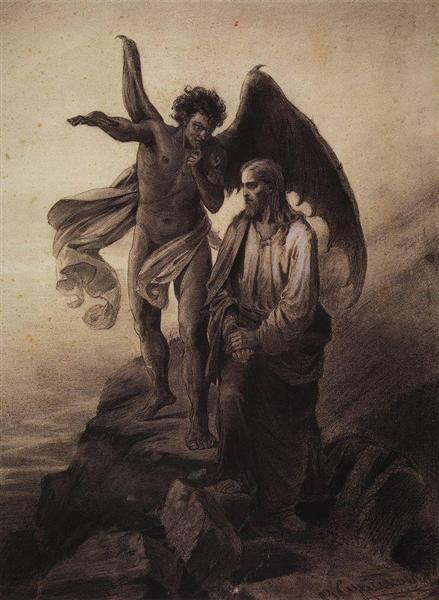
"When the devil had finished every test, he departed from him until an opportune time.” (Luke 4:13)

I guess the smart dudes who cooked up the Revised Common Lectionary decided to liken our journey through the forty days of Lent to the journey of the Israelites through the wilderness in the Exodus story. That’s why they hooked up the story of Jesus’ forty days in the wilderness (Luke 4:1-13) with the story of how the Israelites were saved from Egypt and survived forty years in the wild as told in Deuteronomy 26:1-11.

So good. Now we know there’s a “wilderness” motif in the lessons for Lent 1. Not being a great outdoors man myself, all I can say about the wilderness is there’s lots of scary stuff in it. Depending on where your wilderness is, there’s sweat-boiling heat or butt-hugging cold. There’s hunger and thirst. There’s snakes and bugs or bears and mountain lions. Give me the city any day. The wilderness is just too dangerous a place!

But we all end up in our own metaphorical wilderness—our lonely and dangerous place—at some time or other, don’t we? That’s what this story in the Gospels has always meant to me: Jesus had to face the same crap I have to face. The devil and temptation were after him, too. If Jesus’ story didn’t include episodes which resonate with my own life, I don’t think I’d find him to be such an attractive Lord and Savior. I think it’s pretty important to note in our story that it’s God’s Spirit (v.1) which forces Jesus into the wilderness. If we’re to love him, we have to know that he went through the same initiation test.

Our wilderness can take a whole bunch of different topographies. If, like Jesus, you’ve just had an experience which makes you feel like the heavens have opened and showered glory on you—like you’ve got the whole world by the Fruit of the Looms—you’re headed for temptation. If you find yourself shut out, lonely, angry, or hungry, get ready to encounter the devil.

A word about the devil. The Greek word Luke uses for this character is diabolos (That’s diabolos for you who like to see it written in Greek.[i]). It actually refers to an accuser or one who spreads wicked gossip. Maybe you don’t believe in an anthropomorphized devil with horns and a pointed tail. I don’t either. But you should believe that nothing exists without its opposite. If there is a Spirit which calls us to love and sacrifice and be joyful in creation, there can also be the dark, frightening absence of such a spirit. And in that dark wilderness is the voice of lies and accusation and doubt. That empty spirit causes us to question God’s goodness and our own worth. It leads us to choices we’d be better off not making. It leads us to shame and inadequacy and resentment.

In this Gospel lesson, the devil tries to goad Jesus. “If you are the Son of God, command these stones to become a loaf of bread (v. 3)” Greek scholars[ii] tell us that the way the word “if” is used here really means “since you ARE the Son of God.” It suggests that Jesus is somehow not doing something he should do. It’s a trap to turn him away from the promise and mission he’d been given and make himself the hero of what should be God’s story. He will face this temptation throughout the Gospel narrative.

But this empty, inadequate, shameful spirit is with us, too. When we come to Christ, as a child does in baptism, we are asked to renounce the forces of evil as well as the powers of this world—our culture—which rebel against God. We are constantly hearing the whisper that we’re not young enough, pretty enough, rich enough, interesting enough, experienced enough, educated enough, or important enough. A consumer-based and fame-based culture is constantly filling us with shame covetousness, and alienation. Such feelings ultimately lead to resentment and anger or misery and despair. It’s as if the devil says to us, “If you are God’s child, why aren’t you better than you are?”

If we are not driven by the Spirit of God, our focus ultimately falls on ourselves. That’s why the baptismal rite also asks us to renounce the ways of sin which draw each of us personally away from God. If we try to be the center of our own universe, if we try to measure up, we’ll never find peace. This is what Martin Luther learned. We’re never enough. We can only rest in God’s grace.

So there it is. We have some good news and some bad news. The bad news that our Gospel lesson and our Lenten focus on contrition force us to face is that the temptation never really goes away. The devil only left Jesus, the story says, until an opportune time (v.13). But the good news is this: The accusations, the doubt, the shame, the loneliness—don’t win. Ultimately, they don’t have the power. Jesus did his time in the wilderness and so will we; nevertheless, just as he overcame, we, too, will overcome.

This our canteen in the wilderness.

Thanks again for looking in on me this week. God bless!


[i] I always feel like a real smart ass when I can translate from Greek.
[ii] I had to look this one up on the internet. I’m not THAT smart!

Tuesday, March 5, 2019

What's My Motivation? (Reflections on Ash Wednesday)


Image result for images for Ash Wednesday
“Return to the Lord, your God, for he is gracious and merciful, slow to anger, and abounding in steadfast love, and relents from punishing.” (Joel 2:13)

I used to have this old guy in my congregation—a fellow who has now, alas, gone home to the Lord—who would send me angry letters and emails whenever I referenced American politics, current events, or popular culture in my Sunday homily. “I’m not interested in your opinion, Pastor,” he’d write. “I came to church to hear about Jesus!”

I can’t say that I disagree with him. If we are thirsty for the Word, we want to hear it from Jesus. But nevertheless, I think it’s not such a bad idea at times to consider our own situation in history and how the words of Jesus relate to who we are. If all we care about is our own relationship with God and our personal salvation, and we have no interest in the world around us, I think we just might be missing the point.

The Ash Wednesday Gospel is the same every year. We hear the words of Jesus from the Sermon on the Mount (specifically, Matthew 6:1-6, 16-21). It’s pretty unambiguous stuff. Jesus is warning us about practicing our piety in public. I could probably just read this and sit down as I don’t think there’s anything too complicated in what the Lord is telling us here. He means what he says. No parables, no allegories. Simple.

BUT (and there’s always a “but”), implicit in Jesus’ exhortation about practicing piety publically is the expectation that we should always be practicing piety. We just want to be really, really clear about what our motives are in doing so. If we’re looking for praise or a sense of self-congratulation, or if we want to show that we’re “right” so we can sneer smugly at those who are “wrong,” our actions might not be that pleasing to our Heavenly Father. Under those circumstances it’s not really piety. It’s hypocrisy.

Yeah, it’s all about motive. Want an object lesson? You don’t have to look much further than the testimony given last week by Michael Cohen before the House Oversight and Reform Committee. Mr. Cohen, for over a decade the personal attorney of Donald Trump, rolled over on his old boss calling Trump a racist, a con-man, and a cheat. My question to him would be, “Why did you work for him? What motivated you to be his toady?”

Why do any of us do the things we do?

Here’s one possible answer: Sin.

Yeah. Sin. Sure, every stupid decision we made looked like a good idea at the time. It’s only when we, like poor Mr. Cohen who is going to jail for three years, face the “day of clouds and thick darkness”[i] that we start to recognize that our motives weren’t very pure. We realize that we’ve been lazy, and we’ve avoided facing the truth. We suddenly find out that we were okay accepting simplistic answers to complex problems. We’ve looked the other way, blamed other people, washed our hands of responsibilities, and chased after short-term pleasures at the risk of long-term problems. We’ve stood aloof to the suffering of others as long as we ourselves feel comfortable and not threatened. But the threat is still there. The day of the Lord is coming.

Ash Wednesday, the start of Lent, is the time we force ourselves to confront our apathy and hypocrisy. It’s the day we remember that our life won’t last forever. Dust we are, and to dust we will return—and we don’t know when.

We can, however, read the writing on the wall. Our planet’s climate is changing. Our healthcare costs are still going up. Our government gives tax breaks to billionaires, and it’s anyone’s guess how those breaks will be paid for—very likely with cuts to social programs. The pundits are already predicting another recession by the end of next year.[ii] We are also being told that church attendance in America is dropping like a rock. Lutheran congregations in Northeast Philly have been folding up like last year’s Arizona Cardinals.[iii]

All the above begs the question of what we are motivated to do. Do we choose comfort or sacrifice? Ourselves or a cause greater than ourselves? Do we hope for the best or take the time really to understand what the best is? Jesus is asking us to seek him in prayer, be generous and merciful givers, and to weigh our priorities. The Lenten traditions of fasting, sacrifice, and abstinence are, after all, means by which we distinguish our desires from our needs.

If ever there was a time to get our act together as Christians, this is that time. Since the US Congress has chosen, in its wisdom, to give us all a tax cut, I’m planning on taking the extra five bucks a week which that cut has put in my paycheck and returning it to my congregation so we can go on providing a healing space for the addicted, a shelter for the homeless, and a garden and food collection site for the hungry. I am encouraging everyone to be faithful in their prayers, in their giving, and in their worship so the mission of Christ’s church may continue.

This is the time to repent of any apathy and be prepared to sacrifice. If our motives are for the glory and goodness of Christ’s witness, I don’t think he’d mind a little public piety.


[i] See Joel 2:2, part of the Hebrew scripture lesson for Ash Wednesday.
[iii] My apologies to Cardinals fans, but your team DID suck last year.

Thursday, February 28, 2019

Nobody Glows? (Reflections on the Transfiguration, Year C)


Image result for images of transfiguration of jesus
“…This is my Son, my Chosen; listen to him!” (Luke 9:35)

Have you seen that TV commercial for ChoiceHotels.com? It’s the one where a bunch of ad execs are sitting around a conference table looking at a potential TV spot for Choice Hotels. The video they watch shows a happy couple who are so delighted they have booked through Choice that they give off a radiant glow. A young ad man cynically responds to the video by saying, “Nobody glows.” The boss points to him and replies, “He gets it.”

So, seriously, who glows? The idea that a human being can emit a dazzling light is one of the things which makes the Feast of the Transfiguration a hard sell for a preacher. It’s a weird miracle story, the full cultural significance of which may be lost to time and distance. In Luke’s version (Luke 9:28-36), Jesus is on something of a prayer retreat with Peter, James, and John on a mountain top. As he prays, his face is changed and his clothes appear dazzlingly white. This would be bizarre enough, but the boys with him suddenly see the figures of Moses and Elijah appearing with their teacher, and conversing about Jesus’ “departure” which will happen in Jerusalem. There’s lots of confusing stuff here. Why does Jesus glow? How do the three disciples recognize Moses and Elijah—who have been dead for centuries—in this pre-photographic age? What exactly do they mean by his “departure?” What does it all mean?

Like all good pastors with too little time on my hands to figure all of this out, I’m just going to pick and choose elements of this story and hope to God I have something relevant to say about it. First, I’m not sure that nobody glows. Okay, nobody actually emits light, but we could use the term metaphorically. When someone is seized by great joy, don’t they seem to be giving off a shine? Haven’t we seen a bride glow as she walks down the aisle to her beloved? Or, have you seen the brilliance on the face of a new parent? There are moments which seem so exquisitely lovely, so much like a glimpse of heaven that our faces seem to radiate.

I think that’s what’s happening here. Perhaps what this story is describing is not what Jesus experiences, but rather what Peter, James, and John were experiencing in his presence. The sublime one-ness Jesus has with the Father God was something which became real to those guys on that mountain. They may not have understood Jesus, but they knew when they looked at him that they were having a divine encounter. Of course, the problem with divine encounters on mountaintops is that they don’t last forever. In fact, they’re over almost as soon as we recognize that they’re occurring. Peter is so thrilled with the joy of the Lord that he wants to pitch some tents and just stay with Jesus in that beautiful but isolated moment. Too bad he can’t.

The Revised Common Lectionary marries this story to the story of Moses’ encounter with God in Exodus 34:29-35. Moses is glowing so much after his mountaintop chat with the Lord that he has to put a veil over his face so he doesn’t blind the other Israelites. By the time of St. Paul, however, this story has been modified. Paul thought the veil was Moses’ tricky way of keeping the others from finding out that the glow quickly wears off. (2 Corinthians 3:13)

That’s why I appreciate that the good ol’ boys who cooked up the RCL have given us the option for Transfiguration to read on to verse 43. This whole section together might just hold a mirror up to who we are as disciples of Jesus. There are a bunch of different characters in this story, and they all know Jesus, but they all have different reactions.

First, we have Peter, James, and John. They’ve had the mountaintop experience. They’ve seen the glow. They want—at least Peter wants—to stay on that mountain alone with Jesus and feel that warm glow of his presence. But they can’t. None of us can. They have to get used to the idea that the world exists below that summit, and they’re just going to have to carry that small moment of bliss with them back into the smelly outhouse of daily life.

Then there are the other disciples who haven’t had the experience. They’re just plodding along, waiting for Jesus to get back. They don’t think they can do anything on their own. They seem to be suffering from a nasty case of low self-esteem or, as the sociologists call it, surplus powerlessness. Jesus actually gets a little pissed off with these boys when he’s told they were unable to cure the epileptic boy in verses 37-42. I can see Jesus saying to them, “Didn’t you guys even try?! You saw how this kid and his dad are suffering. Isn’t this your mission as well as mine?” I guess these disciples, even after witnessing myriad acts of healing by Jesus, even after hearing an authoritative gospel from his lips, still don’t really believe that God will give them the power to make a holy change and declare God’s glory. Jesus is right to be annoyed with them.

Finally, of course, there’s the dad of the epileptic boy himself. He believes Jesus can heal. At least he wants to believe it. He seems pretty desperate. He knows about Jesus, but only comes to him when he’s in real trouble. He’s the guy who proves the old saying, “There are no atheists in a foxhole.” I don’t think he has a living faith in Christ. Rather, he’s got a kind of superstitious faith which turns to Jesus in his moment of fear.

There’s just so much rich stuff in the Transfiguration story that I can’t possibly do it justice, even though this is the twenty-first time I’ve been called on to preach about it at Faith Lutheran of Philadelphia. So I’ll go with this: the three reactions to Jesus in this story—the ones who want to stay on the mountaintop, the ones who don’t believe they can do God’s work, and the one who stands outside and only comes to Christ out of fear—are pretty lousy examples of people living a faith.

Whether we’ve had the mystical experience or not, we all have to come off the mountain some time and deal with the real world. But we can’t assume that we are powerless in it. Jesus has called us to be people in mission to each other, and that means believing that achieving the mission is possible. Sometimes the cloud overshadows us and we are terrified, but we have the voice of Jesus to guide us as we march toward our own cross and our own resurrection.

Keep the faith, my friend, and drop by again, won’t you?

Thursday, February 21, 2019

WARNING: Explicit Material (Reflections on Epiphany 7, Year C)

Image result for Images of Joseph forgiving his brothers
"Joseph Forgives his Brothers" Fracois Pascal Gerard (1770-1836)

“But I say to you that listen, Love your enemies, do good to those who hate you.” (Luke 6:27)

When we last left Jesus (in last week’s assigned Gospel from the RCL), he was delivering his “Sermon on the Plain.” He was warning folks that things change. Those who are miserable today will have joy in the future, and those who are top dogs now might just get screwed later on. In the Gospel for Epiphany 7, Year C (Luke 6:27-38), Jesus gives his disciple—and us, too!—some pretty explicit directions. These kind of boil down to two rules:

1.      We have to forgive and love all the rotten, stupid, hurtful anal sphincters (metaphorically speaking) in our lives, and
2.      We have to be selfless and exceedingly generous.

As I guess you’ve figured out by this time, I’m a pretty liberal theologian. I don’t consider that every word in the Bible should be taken literally. The Bible is made up of many writings of various genres, and I think we can get away with seeing some of it as allegorical.

But not this passage. This is literal. It means just what it says.

The trouble is, many of us suck at following these directions. Have you ever been hurt? Really hurt? Have you been molested, abused, betrayed, wounded, lied about, beaten, or robbed? If you have, I’m guessing that love and forgiveness are pretty low on the list of things you’re wishing on the sack of scum who hurt you. But loving and forgiving is what Jesus tells us to do.

The compilers of the RCL have, in their wisdom, married this Gospel passage to a reading from Genesis (Genesis 45:3-11, 15). This Hebrew Scripture narrative is part of the story of a guy who really got hosed by others. Joseph, the eleventh son of Jacob, is his daddy’s favorite. If dad’s obvious preference for him weren’t enough to anger his jealous older brothers, this little snot tells the other boys that he has divine dreams in which he sees himself ruling over his siblings. Consequently, the older lads can’t stand this kid. Deciding that killing him might be a bit extreme, they sell Joseph as a slave to Arab traders and tell their old man the kid was killed and dismembered by a wild animal.

Now, I know a lot of folks have felt themselves wronged by their siblings. Still, you’ve got to admit that being sold into slavery would be a pretty hard thing for any of us to get past.

Fast forward Joseph’s story to the 45th chapter of Genesis. The kid has grown up, been freed from slavery and prison, and has risen to become the Prime Minister of Egypt. He’s got an Egyptian wife, a company car, and he’s been put in charge of the Royal Exchequer and been made Minister of Agriculture. There’s a global famine going on, and Joseph is making the Pharaoh of Egypt even richer by price-gouging desperate foreigners. When his treacherous brothers show up in Egypt starving for food, he has a chance to pay them back for the dirt they did to him.

But he doesn’t.

He chooses forgiveness. NOTE: He chooses it. There’s a difference, as Gandhi and Dr. King taught us, between forgiveness and mere submission. Submission is accepting someone else’s crappy behavior because you really have no option. Forgiveness is knowing you have the power and the will to fight back and be revenged, but you’ve made the conscious choice not to do so. Forgiveness comes from a position of strength.

Generosity is also a product of strength. In her book Nine Steps to Financial Freedom, finance guru Suze Orman uses the analogy of the closed fist. If your fist is closed around what you have, nothing more can come into it. Giving is a matter of faith. Stinginess is a matter of fear. When you obey Jesus’ command to generosity, you’re making two statements of faith. First, you’re saying you believe in God’s providence. You can give because you know God won’t let you starve. You’re also saying you believe in that to which you give. You’ve made the choice to extend God’s blessings to a righteous cause. You’ve nudged the Kingdom of God just a little bit further forward by your generosity. So ask yourself: Would you rather be faithful or afraid?

Jesus asks some hard things of us in the Gospel. Reading it is like getting a performance review by your boss. How do we measure up to these instructions? Do we have the courage to live by these phenomenally high standards? I’m pretty sure I don’t. So that’s why I need to fall on Christ’s mercy and ask the Holy Spirit for the bravery and freedom to be a Christian.

I think it’s worth the effort, don’t you?

Thanks for swinging by my way this week!