Sunday, March 31, 2013

Christ is Risen! Alleluia!

 
Christ is Risen! Alleluia!
 
A very blessed Day of Resurrection to you, my friends!
 
Can I just say that I LOVE Easter!? It's my very favorite day of the year, and the holiest day of the Christian calendar. I guess it's the retired actor in me, but I love the Church's liturgy of acting out the passion and resurrection story of Jesus. Every year, we get to make this story real to us by acting it out in our public worship. Last Sunday we waved the palm branches which greeted Christ on his entry into Jerusalem. On Thursday we washed the feet and ate the meal, then we stripped the altar in solemn remembrance of the betrayal, abandonment, arrest, beating, and mockery which Jesus endured that night. The following evening we told the story of his trial and death on the cross, slowly extinguishing the lights until we sat in the darkness of a world without redeeming love.
 
But then this morning came. Like the women in the gospels I arose in the darkness of early morning. And, as I have for the last fifteen years, I came to a garden to meet with fellow believers and praise the goodness of God.
 
Sunshine or rain, tornado, or blizzard, year after year, about 100 or more Philadelphia Christians gather on the banks of the Delaware River and sing to the rising sun. We are Lutherans and Episcopalians, Baptists and Methodists, Roman Catholics and United Church of Christ and every other Christian denomination. On this morning, our tiny doctrinal differences don't matter to us.
 
We are clergy and laity, black and white, old and young, straight and gay. We are ALL believers in the deliverance made known to the world in Jesus Christ, the immortality of our souls, the goodness of God, and the call to love one another for the healing of the world.
 
We sing contemporary songs, but we sing the old hymns too. Sometimes, in those old, well-remembered words, I can almost feel the spirits of the departed singing with us from Heaven. We pray together. We acknowledge our faults. We jointly proclaim the beliefs which bind us together. And, year after year, the riverbank is a place of joy and love among neighbors and strangers.
 
For me, it is always the singing. I love to sing, and I love to hear people sing. In this mp3 player generation, how wonderful it is to hear people stand together and just sing.
 
Sing we to our God above, Alleluia!
Praise eternal as his love: Alleluia!
Praise him all you heav'nly host, Alleluia!
Father, Son, and Holy Ghost, Alleluia!
 
May Easter's joy fill your hearts! Thanks for reading.


P.S.-I have but one lament: Our ecumenical worship this morning did not include the celebration of the Holy Eucharist. Unfortunately, our Roman Catholic brothers and sisters are not yet permitted by their doctrine to join with the rest of us. Pray that the new Pope will soon invite ALL Christians to the table of the Lord and that our fellowship will be complete.


Wednesday, March 27, 2013

Creepy Stuff (Reflections on Holy Week)

A very blessed Holy Week to you all.

Have you noticed--or maybe it's just me--how creepy American popular culture has been getting lately? Every time I turn on TV it seems that the stories on current dramas are growing darker and more gory and, well, just kind of sick. We are deluged with stories of grizzly sex crimes, serial killers, cannibals, and just lots of perverted, violent stuff. Maybe it's always been like this and I'm just getting more sensitive in my old age, but I almost feel as if the culture is obsessed with darkness.

Even stuff which used to be kind of innocent has taken on a sense of menace, disease, and dysfunction. As a kid I used to read Marvel Comic Books. They were fun fantasies then. But I don't know if I could recommend to a six-year-old today the adventures of a Spider Man who is being consumed by the "dark side" of his nature, or a Captain America with PTSD, or an Iron Man with a substance abuse problem! Even our fairy tales are being repackaged in a more sinister form with TV dramas such as "Grimm" and "Once Upon a Time."

And yet, people still tell me that they don't want to attend a Good Friday tenebrea worship because it's "too depressing!"

To an extent, I have to agree with them. The presence of human darkness is deep within the Christian mythology and ritual--and no more so than during this week. On Holy Thursday we see Judas, a symbol of treachery and greed. We see the machinations of the Sanhedrin, supposedly a wise council, but puffed-up with arrogance, lust for power, and jealousy. And on Good Friday there is that consummate thug, Pontius Pilate, as ruthless as Bashar al-Assad in putting down dissent, surfeited with corruption and cruelty.

All of this leads us to the contemplation of that most obscene invention of human brutality--the cross.

But running throughout this story of thorns, mockery, impaled flesh, and abandonment is a parallel story of self-emptying, sacrificial love and forgiveness.

"Then Jesus said, 'Father, forgive them; for they do not know what they are doing.'" (Luke 23:34)

Our current popular culture of darkness is really rather safe by comparison. It does not require anything of us but to enjoy being scared and to relax when the story is over. But the darkness of Holy Week is entwined with the light of God who calls us to look at ourselves and see what we are capable of doing, and then to look to God and see how God is capable of loving.

This darkness requires our response.


Thursday, March 14, 2013

Holy Awkwardness (Reflections on Lent 5)

Mary, Martha, and Jesus
 
I don't know. Is anyone besides me uncomfortable with this week's assigned gospel reading from the Revised Common Lectionary, John 12:1-8? I mean, when Jesus says, "You always have the poor with you, but you do not always have me (verse 8)," doesn't that strike you as a little arrogant? And what do we do with the very troubling character of Judas? In the other gospels, he's kind of a pathetic betrayer. He tries to give his blood money back to the priests, and he kills himself in anguished remorse for his act of betrayal. In John's gospel, he's just a greedy thief (verse 6). Also, how do we handle the fact that all four gospels have a different variation of what is obviously the same story?
 
Okay. That last question doesn't bother me so much because I don't think the Bible authors gave a rip about historical accuracy. I just take each story on its own merits and try to figure out what point the evangelist was trying to make and how the particular tale can relate to my life and issues. And I like to put myself inside the story and look at it from the point of view of one of the characters.
 
So who am I in this story? I know one thing: unless I die on a cross for the sins of the world, I'm not Jesus.
 
But imagine a dinner party given in Jesus' honor in a humble home in Bethany. Jesus is being honored because he has given the hosting family the greatest gift imaginable--he has brought the host, Lazarus, back from the dead. Lazarus lives with his two unmarried sisters who serve as hostesses. I guess they're a poor family. Maybe the three adult siblings have never married because weddings are just too expensive? There don't seem to be any servants here, either. Big sister Martha waits at table herself, while little sister Mary does the slave's work of hospitality by washing the feet of their guests.
 
This is all perfectly fine and dandy until Mary does something completely unexpected. She busts out a jar of pistachio nut oil--a really expensive jar, worth about twelve to eighteen grand on the open market--and she anoints Jesus' feet with it. In itself, this act makes me a bit uncomfortable because I know this oil costs a lot more than this poor girl should be spending. But then she really does something wild. She starts to wipe his feet with her hair.
 
Awkward.
 
I shift uncomfortably in my seat. This is just too passionate. It's too intimate and too personal. I'm embarrassed in the face of this self-emptying adoration.
 
But Mary doesn't care. She doesn't think about what's right or legal or theological or practical. All she knows is that she loves this Jesus. He gave her back her brother. He turned her mourning into dancing. She can never repay him for the blessing he gave to her. All she can do is pour out her heart with this expensive foot bath in humble devotion and gratitude.
 
So who am I in this story? I'm Judas, of course. I can't bring myself to envy Mary's love for Jesus. I can only feel ashamed that I am unable to give myself to such passion, so I make a self-serving criticism of the woman who is capable of bestowing her heart so openly and poignantly. "Why," I ask, "was this perfume not sold and the money given to the poor?" Not that I even care about the poor, but, as the treasurer of the group, I want to see that my own needs are met. You see, I'm very good at making justifications for my own selfishness and lack of zeal.
 
But Jesus understands something here which neither I, Judas, nor Mary herself understand. Charity for the dead is equal in this culture to charity for the poor.
 
As beautiful a gift of love as Mary has given Jesus, he is about to give a greater gift--his life. And the wonderful thing he has already done for her will be as nothing compared to the wonderful thing he is about to do. He will make all things new.
 
May you have a blessed week, my friend. Thank you for reading. Find your passion for Jesus. Remember the poor.

Thursday, March 7, 2013

Fairness v. Justice (Reflections on Lent 4)

Every Christian in America knows this Sunday's appointed gospel lesson from the Revised Common Lectionary. It's Luke 15:1-3, 11b-32, better known as "the Parable of the Prodigal Son."

But just in case there's someone out there who doesn't recall the story, it goes something like this: A landowner has two sons. The older of the two, under Hebrew culture of the time, will inherit the majority of the property upon his father's death. This being the case, the younger son asks his old man for his share of the property in advance. The father gives it to him, and this young knucklehead strikes out on his own, basically wasting his inheritance on hookers and booze.

Then, as luck would have it, the whole country goes into recession. The young son is broke, out of work, totally ashamed, and forced to take a job cleaning pig poop. Coming to his senses, he decides to return to his dad's estate, apologize for being a complete idiot and an embarrassment to the family, and beg his father to employ him for wages.

The kid's dad is overjoyed at seeing his long-lost son return. He welcomes him with open arms and throws a huge "Welcome Home" party. Meanwhile, his older son sits outside the festivities sulking. When the father asks him what's wrong, the older son gives him an earful about how unfairly he's been treated. After all, he's worked with his father faithfully all his life. His idiot brother has squandered money and disgraced himself. The older boy wants to know why the party is being thrown for the family meathead while he--the faithful son--has never been recognized. The father says,

"Son, you are always with me, and all that is mine is yours. But we had to celebrate and rejoice, because this brother of yours was dead and has come to life; he was lost and has been found." (Luke 15:32)

Earlier in the pericope, Jesus says,

"I tell you there will be more joy in heaven over one sinner who repents than over ninety-nine righteous persons who need no repentance." (Luke 15:7)

And that's kind of the point.

Nevertheless, I have a mature lady in my parish who just hates this parable. She doesn't want to see the little reprobate jackass brother get rewarded. "It's just unfair!" She tells me. And I guess I get that. But the whole nature of life is unfair, isn't it?

To my way of thinking, "fair" really shouldn't be the issue because "fair" implies equality. I would much rather be concerned about justice and mercy. After all, we're never going to have things be completely even-steven equal are we?

Think about your own family. I believe that in every family on the planet there will always be one kid who will get more attention and/or resources from Mom and Dad than the other siblings. This will be the kid with special needs. The kid who can't seem to find himself. The kid addicted to alcohol and drugs. The family screw-up. This child will get more because this child will need more.

Similarly, in every family there will be one kid who will end up holding the bag for an aging parent. All the duties will fall on his or her shoulders. Why? Because this is the kid who, by virtue of proximity, maturity, or resources, will be able to perform the function of caregiver.

We all live in a system of family-based socialism--from each according to ability, to each according to  need. "Fair" never enters into it. We just try to do what we can and hope we are doing right. I would hope that the "older brothers" out there recognize what an honor and privilege it is to spend time with their aging parents, and not think of their care-giving as a burden.

Similarly, in my years of ministry, I've seen lots of families with sons and daughters who have caused boat loads of emotional pain. I've seen parents and siblings who have wisely cut off contact with the family screw-ups so as not to enable destructive behavior. But I am yet to see a parent who would not willingly sacrifice a limb in order to get that child to repent and come home contrite and whole.

Bottom line? God desires our repentance and our forgiveness of each other. After all, don't we pray in the Our Father to be forgiven as we ourselves forgive? It may not be fair, but it is right.

I dream of a world in which forgiveness is a chief priority. Just imagine: The U.S. would welcome Cuba back into the family of nations, Lutherans and Roman Catholics would kneel together at the communion rail, and country music radio would once again play the Dixie Chicks! Wouldn't that be grand?

Thanks for reading, my friends. Drop me a comment and let me know what you're thinking, okay?

Thursday, February 28, 2013

A Darn Good Pope

This post is being written on an historic day--the first time in almost six hundred years in which a pope has voluntarily removed himself from his office as head of the Roman Catholic Church. My Lutheran hat is certainly off to Benedict XVI, and I admire the pontiff for recognizing that age--although it brings wisdom--also carries increasing limitations. Pope John Paul II's dedication to his duties in the face of age, illness, and progressive incapacity was certainly heroic. Nevertheless, the sight of this frail gentleman forced by tradition to continue his role on the world stage seemed to be tinged with a bit of cruelty. I kept thinking, "Let the poor old guy retire, for cryin' out loud!" So I'm glad Benedict has made the decision he has, and I hope this precedent will become policy in the future.

I'm just sayin'.

But okay. Here's my real purpose in writing. As a Lutheran cleric, I can't help but notice that it is very likely, barring anything really unpleasant, that Benedict's successor will occupy the Holy See on October 31, 2017--the 500th anniversary of the start of the Protestant Reformation. I hope to God that this anniversary will not be marked by a celebration of us against them. I mean, wouldn't it be a really swell thing if that anniversary became an occasion for reconciliation between our two denominations?

Historically speaking, the Lutheran reformers, just as the term reformer suggests, never wanted to split the Christian Church. In fact, the great Lutheran reformer Philip Melanchthon, author of the seminal doctrine of Lutheranism, the Augsburg Confession, once wrote:

"...concerning the pope I maintain that if he would allow the gospel, we too, may, for the sake of peace and general unity among those Christians who are now under him and might be in the future, grant him his superiority over the bishops which he has by 'human right.'" (Melanchthon appended this to his signature on the Smalcald Articles of 1537)

Granted, things were a bit different in Melanchthon's day than in our own. I take it from the above statement that he'd be perfectly happy to submit to papal authority should such authority be used in accordance with what Melanchthon saw as scriptural authority. With 500 years of water under the bridge, I don't see Lutherans and Roman Catholics reuniting under the new pope. However, I do think that we can present to the world a mutual respect for the differences which each tradition brings to our shared faith in Jesus Christ.

To my way of thinking, the greatest reform a new pope can make will be to invite Lutherans to join with our Roman brothers and sisters at the table of Our Lord. Both denominations teach the Holy Eucharist proclaims Christ's death as sacrifice for human sin.

"While they were eating, Jesus took a loaf of bread, and after blessing it he broke it, gave it to his disciples, and said, 'Take, eat; this is my body.' Then he took a cup, and after giving thanks he gave it to them saying, 'Drink from it all of you; for this is my blood of the covenant, which is poured out for many for the forgiveness of sins.'"  (Matthew 26: 26-28)

Okay. We can quibble about transubstantiation vs. consubstantiation and scores of other issues, but they are minor compared with the above statement, to which we all agree.

I would hope that the next pontiff takes a page from the book of a pretty darn good pope who, in my humble opinion, had the most positive effect on world Christianity of any pope in modern history.

 
Pope John XXIII, like Martin Luther before him, changed the language of the mass to the language of the common people and encouraged Catholic Christians to begin reading the Bible. This was huge. So huge, in fact, that Lutherans actually have a special commemorative date (June 3, the day of his death) in which we honor John XXIII as a Renewer of the Church. This pope also opened the door for dialogue between Lutherans and Roman Catholics. I, myself, have participated in Lutheran/Roman Catholic Dialogues and have greatly enjoyed the experience; however, I have to wonder if, after fifty years of talking, we have made much progress towards reconciliation.
 
What a tremendous statement of unity it would be for all Christians if Lutherans and Romans came together to share the grace of God in the Lord's Supper. In my parish, I routinely invite all baptized Christians to come to the altar and participate in the meal. It would simply be a sin against hospitality to invite anyone into our house and not feed them.
 
"There is no longer Jew or Greek, there is no longer slave or free, there is no longer male or female; for all of you are one in Christ Jesus." (Galations 3:28)
 
So c'mon, Rome! It's been half a millenium. We're willing. What about you?
 
Thanks for reading, my friends. As always, I invite your comments.


Thursday, February 21, 2013

Thoughts on Lent

Ash Wednesday
The sign on Our Lady of Calvary Roman Catholic Church which I pass on my way to Faith Lutheran read, "It's Lent. Pray, Fast, Give Alms." That pretty much sums it up, I thought. These are the classic disciplines of Lent--the forty day period in which Christians enter into the wilderness with Jesus in an attempt to get closer to God and prepare for Easter. The gospel reading which leads us into this holiest of times is Matthew 6:1-6 and 16-21. Here Jesus gives us instructions on praying, fasting, and giving.
"And whenever you fast, do not look dismal, like the hypocrites, for they disfigure their faces to show others that they are fasting. Truly I tell you, they have received their reward. But when you fast, put oil on your head and wash your face, so that your fasting may be seen not by others but by your Father who is in secret; and your Father who sees in secret will reward you."
                                                                                                       (Matthew 6: 16-18)
Of course, it always amuses me slightly that our first ritual of Lent is to abandon Jesus' advice and publicly disfigure our faces with ashes. Why? In theory because ashes were the ancient symbol for our grief and our shame. This should lead us to ask, however, just what exactly is the source of this grief and shame? Are we really hurting and contrite, or is this just an empty ritual?
Not too long ago I was watching "The Daily Mass" on EWTN television. (I can't help it--our Roman brothers really do such a wonderful job with their worship and I really love the liturgy.) On this particular night the preacher was a very sweet-natured and soft spoken priest named Father Miguel. He had a lovely pious way about him, and I must say he wasn't a half bad preacher. He was preaching about piety and purity and I was really getting into what he was saying until he made a hard right turn and began denouncing what he considered to be the two great evils of modern American society: same-gender marriage and abortion.
Okay, I thought. The guy is a Roman Catholic priest and he's only doing his job. But I still felt it was awfully facile of Fr. Miguel to locate all societal impiety in these two issues--especially, since he's a celibate male and there's no chance he'll ever commit those acts of which he disapproves so strongly.
For the record--if you haven't guessed by now--I disagree with Fr. Miguel on these two issues. I'm a firm believer that the Church has a duty to embrace and support our same-gender oriented brothers and sisters and see that their rights are respected. As for abortion, I confess to being a bit ambivalent; nevertheless, I will get worked up about the rights of the unborn once I see the rest of society getting worked up over the rights of the post-born. 
But it's not the issues with which I disagree with this good priest that bothered me. Rather, it was his lack of mention of the issues upon which there should be no controversy whatsoever:
Poverty is bad.
Oppression of anyone--racism, sexism, homophobia, etc.--for any reason is evil.
Violence--from war in Syria to gang shoot-outs in North Philly--grieves the heart of God.
We have only one Earth on which to live, and we insult God when we poison God's creation.
There are some who say that the Church has no business entering into political debate on these issues, but I feel that if our faith does not lead us to social action it is as useless and hypocritical as ashes on the forehead which, when washed off at the end of the mass, vanish down the drain and take any regret and guilt we might feel with them.
I want to know that it matters that I am a Christian. I think of Pastor Vernon Johns (whom I referenced in a previous post) who forfeited his congregation and career because he could not preach passively about eternal salvation and forgiveness while his fellow African Americans  were being oppressed under the laws of segregation. I think of Pastor Dietrich Bonhoeffer, who left the safety of the U.S. to return to his native Germany to oppose Nazi tyranny and helped save the lives of countless Jewish citizens. He was ultimately arrested by the Gestapo and executed in the Flossenburg concentration camp. Bonhoeffer railed against what he called, "cheap grace"--a quiet acquiescence to Church dogma which accepted salvation by grace while ignoring human need and suffering. He wanted his response to Christ to be one which was truly sacrificial and loving.
I know that we are not all like Johns or Bonhoeffer, but as we journey through these forty days, we can make contact with our grief for our brothers and sisters and attempt to expunge our shame through determined actions. Anyone can be an advocate in our democracy. For those who don't believe in governmental solutions, there are always places to volunteer. And should you lack the energy for volunteerism, you can always donate your financial resources.
It's Lent. Let's be called into prayer--a prayer to discern those things about which we care dearly. Pray to discover our own mission as ambassadors for Christ. Let's be called into fasting and abstinence which will permit us to see how abundantly God has provided, and how much surplus wealth we all have to share with those in want. And let's be called to the the giving of alms. Jesus has taught us,
"For where your treasure is, there your heart will be also." (Matthew 6:21)
Lent asks us to learn how to give our hearts, to learn how to love.
                                                     

Thursday, February 7, 2013

Saint of the Month: Vernon Johns

As the last All Saints Day approached, I got this idea in my head that I would share with my readers some of my favorite Christian saints. You must recognize, of course, that when I use the word "saint," I'm not limiting it to those who have been canonized by the Roman Catholic Church. Rather, I'm using the term as Saint Paul employed it--to refer to ANY sinner saved by God's grace. I'm not too particular about whether the saint is living or deceased either. Some of my saints may seem a bit wacky or obscure to you, but I find them to be inspiring by the very fact of their obscurity.

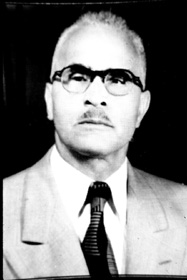
This month (in honor of Black History Month) I'd like to introduce The Reverend Vernon Johns, a man who is considered to be the father of the American civil rights movement even though very few folks (even some African Americans I've spoken to) recognize his name.

I learned about Pastor Johns by reading Taylor Branch's excellent history of the civil rights movement, Parting the Waters. Pr. Johns preceded Martin Luther King, Jr. as pastor of Dexter Avenue Baptist Church in Montgomery, Alabama. As a pastor and preacher, I can't help but admire this guy.

As a preacher, Pr. Johns was erudite (he was a self-taught grandson of slaves who worked his way through Oberlin College and the University of Chicago School of Theology), dynamic, and completely unconventional. He encouraged black capitalism by offering his own garden produce and catfish for sale from the pulpit. The proper black elite deacons of his congregation were scandalized by Johns' often outlandish castigations of his congregants, fearing that the pastor was encouraging civil disobedience. Indeed, Johns had run-ins with the authorities by openly violating racial segregation laws at place in Montgomery in the 1940's.

The Evangelical Lutheran Worship liturgy for Holy Baptism reminds us that all Christians are called to "proclaim Christ through word and deed, care for others and the world God made, and work for justice and peace." Pr. Johns was certainly not afraid to work for justice in a time when so much justice was denied to so many, and when the call for justice could be so very dangerous. I admire his bold--and sometimes shockingly honest--preaching and his fearless stand for justice.

Ultimately, the deacons of Dexter Ave. Baptist called Pr. Johns' bluff and accepted one of his many offers of resignation. The pastor never  again served a congregation and remained a traveling preacher until his death by a heart attack in 1965. The irony, of course, is that the deacons, hoping to find a younger pastor whom they could more easily control, called the twenty-six-year-old Martin Luther King, Jr. as their next pastor.

In spite of a pretty darn good TV movie about Vernon Johns, his contributions to the civil rights movement remain unknown to many. My take-away is this: you don't have to be the one who scores the touchdown as long as you know you've helped move the ball down the field.