Saturday, December 16, 2023

Hail, Mary (Reflections on Advent 4, Year B 2023)


"The Annunciation" Koninck (Swedish 1655)

The angel said to her, “Do not be afraid, Mary, for you have found favor with God.” (Luke 1:30)

“Hail, Mary, full of grace. The Lord is with thee.” Any Roman Catholic (or former Roman Catholic) will be familiar with these words. They’re the first words of the “Hail Mary” prayer, that oft-repeated orison which forms the bulk of the Catholic Rosary. Praying to Jesus’ mom is an integral part of Catholic spirituality. A former parish administrator—a good Catholic lady who went to mass every morning before coming to work at the Lutheran church—once said to me, “I don’t understand why you people don’t pray to Our Lady. She will help you.” The theological answer to that questions (as every good Lutheran should know) is not that venerating Mary is idolatry. Indeed, our confessions teach that the lives of the saints are always to be held up as examples of righteousness. We don’t pray to the saints because Luther figured the doctrine of intercession of saints was unnecessary. God, in God’s boundless love and grace, values each of us sinners just as much as God values the most pious and heroic of the departed. In other words, we each have a direct line to the Almighty, and no intermediaries are necessary.

(Of course, if you want to pray to Mary, it certainly can’t hurt.)

Doctrine aside, Luther was always very touched by the story in our gospel for Advent 4 (Luke 1: 26-38), and wrote very tenderly of Mary. In fact, he even criticized the angel for accosting the young girl with a salutation that sounded like the wording on a draft notice. He felt it was no wonder Mary should be spooked when the serif greeted her with “Hail” or “Greetings.” Being a dad himself, and having great respect for the mysteries and dangers of childbirth, Luther had wished Gabriel had taken a softer and gentler approach with this young lass who was, we assume, just barely starting her teen years.

Christian art has always tried to make the birth of our Lord look pretty. Our Christmas cards depict a glowing Mary beaming over the manger with a radiance which makes her look like she’s just had a spa treatment—instead of having just survived the messy, sweaty, bloody, and excruciatingly painful ordeal of childbirth. There’s no question about Mary being “much perplexed” (v.29) and probably utterly terrified by the prospect of having a baby. Back in my middle school teaching days it was painfully common for me to see thirteen or fourteen-year-old girls get pregnant. I used to go into emotional convulsions thinking about the awesome responsibility of a child having a child. The physical dangers of childbirth notwithstanding, I couldn’t imagine the terror these kids must’ve felt knowing their whole futures were about to be irrevocably altered. Mary must’ve felt the same way.

Saint Bernard of Clairvaux, the twelfth century abbot and Doctor of the Church, wrote that three miracles were present in the Annunciation of Our Lord: 1) that God would condescend to become human, 2) that a virgin would conceive, and 3) that Mary actually agreed to do this. Luther believed the third miracle was the greatest of all. He reasoned that “nothing will be impossible with God,” but a thirteen or fourteen-year-old girl agreeing to undergo pregnancy, risk losing her fiancé, and possibly being stoned to death of adultery or, at the very least, shunned from society was a pretty mind-blowing thing indeed.

So why did Mary agree? What sealed the deal? Gabriel certainly talked up how cool it would be to have this particular baby. Mary would be the mom of the Son of the Most High and the Messiah who would reign on David’s throne forever. That would be pretty sweet. He also assured her she wouldn’t even have to have sex in order to conceive. I imagine that issue was probably weighing heavily on her young mind.

But the grabber was the news that her older cousin Elizabeth was also having a miraculous baby. The only thing scarier than having to face an unknown event is having to face it alone. When Mary learned that a relative, another woman with whom she was comfortable, was going to experience the same thing, she found the courage to say “yes.”  I love that later on in Luke’s gospel (vv.39-56) Mary went to see her cousin and stayed with her until Elizabeth’s baby, John the Baptist, was born. There must’ve been something very special that bonded these two women—neither of whom was supposed to be pregnant. There was the whole astounding mystery and miracle of childbirth which none of my gender will ever understand.

When my wife was expecting, she shared a room in the hospital maternity ward with a lady named Hannah. Both women were having their first child, and they bonded immediately. Even though Marilyn is a Catholic and Hannah is Jewish, the expectant moms found they had much in common. Hannah gave birth to a little girl eleven hours before my stepdaughter was born, but both women cheered and encouraged each other through the experience. They have each been through myriad changes in the years since they met, (Hannah lives much of the year in Florida) but from the day of their daughters’ births to today, they remain the best of friends.

Nothing glues us together like a shared experience. That’s the point of the Incarnation. Jesus has come to share our experience so we will know and believe that God understands our pain and fear, that our temptations and sins will be conquered, and that we are never alone. Emmanuel. God is with us, and there is no place we will go in this life where Jesus hasn’t already been.

We are called in our lives in Christ to be imitators of our Savior. To be present for one another. We are called to share our experiences, to encourage, to help, to teach, and to love each other as Christ did for us. Perhaps we won’t all be heroes in the courageous sense, but we can all be neighbors. And may we all pray for each other as fellow sinners—now, and at the hour of our death.

A blessed Christmas to you, my friend.

Monday, December 11, 2023

Celebrate the Light (Reflections on Advent 3, Year B 2023)


 He came as a witness to testify to the light, so that all might believe through him. (John 1:7)

Isn’t that our job at Christmas? To testify to the light?

Can I tell you I freakin’ love Christmas lights? Some years ago, my wife and I had some evergreen trees planted in the space behind our house. One of them is a Norwegian spruce. It was about five or six feet tall when it first went in the ground. I thought it looked like a Christmas tree, so I strung about four or five hundred outdoor Christmas lights on it. It looked awesome. Unfortunately, as evergreen trees are wont to do, the sucker has now grown to a height of about ten feet and, with its proportionate circumference, illuminating it requires a feat of engineering of which I find myself sadly incapable.

So! This year I got the idea to have the trees by our back patio professionally illuminated. The front of our houses faces a cul de sac, but the backyard is visible to much of the neighborhood. For a mere $400 the Griffiths house could boast two gigantic Christmas trees—each blazing with thousands of colored lights—testifying to Jesus the Light of the World. But, prudence winning out over enthusiasm, the Bride and I decided it was too frivolous an expenditure. We settled on spending $12 at Walmart and lighting a row of boxwoods beneath our front window.

Christmas in the Northern Hemisphere comes at the winter solstice—the time when our half of the planet is tipped the furthest from the sun, the days are the shortest, and the nights are longest. Since Jesus didn’t have a birth certificate, we don’t really know when his actual birthday was. Subsequently, our early Christian ancestors appropriated some pagan solstice festivals. One of these was Sol Invictus, or the feast of the Unconquered Sun. This involved a lot of bonfire and candle lighting on or around December 25th. Our ancestors liked this festival because we considered Jesus to be the Sun of Righteousness who was unconquered by death on the cross. Another Roman solstice festival was Saturnalia. This shindig resonated with our ancestors in that it called for masters to serve slaves (Jesus said the first will be last, remember?), and promoted feasting, merry-making, and general silliness. These customs carried on as Christmas customs well into the Middle Ages and are still practiced—however unofficially—today. We Christians still light the candles on the Advent wreath, put lights on our homes, and defy the darkness with joy.

In the gospel lesson appointed for Advent 3, Year B (John 1:6-8, 19-28) we’re told that John the Baptist came to testify to the light. Jesus, the light of the world, shines on us to illuminate our unworthiness, call us back to his love, and to light our way in the darkness so we can go forward without fear. I really dig how John the Baptist, in the Gospel of John, has such a sense of humility about his relationship to Jesus. He is incredibly self-effacing in this reading, claiming he isn’t even worthy enough to do the slave’s job of taking off the master’s sandals. By shining a light on his unworthiness, he highlights the supreme worthiness of Jesus. We’re all, in our own way, a bunch of unworthy screw-ups. Yet Jesus came to be with us, to teach us, to heal us, to suffer with us, and to rise for us. Jesus sees us as worthy, and that’s reason enough for a party.

Now the priests and the Levites in our reading could use a little enlightening. They seem to have been dwelling in the darkness of closed minds. They had their list of who should be preaching and baptizing, and they couldn’t reconcile anyone outside their parameters as having a word of divine wisdom. John even told them that the Messiah is standing among them, yet they do not know him. I think their darkness came from an unwillingness to see possibilities.

It's pretty easy to slip into that kind of darkness in our world. We see so much violence and feel so much loss. It’s easy to despair, and despair is the brother of apathy. When we feel there is nothing we can do, we simply stop caring. When we stop caring, we stop being human. We need to believe in the light.

A few weeks ago I was asked to participate in a service at one of our local funeral homes. This was a Christmas tree lighting ceremony for families who had lost loved ones during the past year and were facing the first Christmas in which a chair would be vacant at their feast. I could certainly understand their feelings. I lost my dad many years ago on the 12th of December. I had planned to get my Christmas tree that week, but I had to wonder if it was at all right to celebrate when the family patriarch—the guy who was the epoxy that held our family together at Christmas—was so recently deceased. My mom had lost her partner of thirty-five years and, suffering from severe COPD, was left without her primary care-giver. My siblings had lost their dad. Would celebrating be in bad taste?

The Christians of Bethlehem seem to think so. This year Christian leaders in Bethlehem in the occupied West Bank—Roman Catholic, Orthodox, Syrian, Coptic, and Lutheran—have all agreed that Christmas cannot be celebrated while so much violence and death is raging in Gaza. The Christmas crèche at Evangelical Lutheran Christmas Church in Bethlehem has been intentionally covered in rubble and debris as a sign that Jesus is in solidarity with all the children of Gaza who have been buried beneath the wreckage caused by Israeli bombardments.

BUT: for the grieving here in America, I say “Light the lights.” Yes, we are witnessing war, inflation, declining church attendance, horrific weather events, bickering politicians, street crime, and any number of discouraging and dysfunctional things that would make this the wrong time for a party. But we will celebrate the light of the World all the same. The secular world may use Christmas as a time to anesthetize themselves from the surrounding darkness, but Christians use this time to defy the darkness. For as long as Jesus Christ is in this world, there will be hope.

(By the way, I decided to get the tree that year. My dad would’ve wanted me to)

May God bless you with defiant joy this Advent Season!

PS - I encourage you to watch this video from our Lutheran brothers and sisters in Palestine. Click on Christmas Lutheran.

Tuesday, December 5, 2023

Clean Up! (Reflections on Advent 2, Year B 2023)


John the baptizer appeared in the wilderness, proclaiming a baptism of repentance for the forgiveness of sins. (Mark 1:4)

You’ve got to love John the Baptist, that wacky, bug-eating guy who always shows up in our gospel lesson on the Second Sunday in Advent (Mark 1:1-8 this year). Sometimes God uses crazy people to get our attention, and, as Jewish prophets go, John really isn’t much more bizzaro than Ezekiel or Jeremiah or Hosea. He’s out in the wilderness, a figure set apart, wearing his camel skins, a no-nonsense, call-‘em-as-I-see-‘em kind of guy. He might seem a little scary, but he’s come to rattle our collective cages and shake us out of our torpor.

If you’ll recall, John got himself in no small amount of trouble by criticizing Herod Antipas, the King and ruler of Galilee. It seems old Herod had married his brother Philip’s ex-wife, Herodias. To us, taking your brother’s cast-off missus doesn’t seem like too big a deal, but in the world of the text it was definitely a no-no. I might be a little more liberal in my views of divorce and remarriage, but I have to agree with John in one aspect: if the leader of the land breaks the law (and Herod did it pretty flagrantly), what does that say to the people he’s supposed to be governing? When corruption and indolence become the norm for leaders, doesn’t that give license to everyone else to slack off in their observance of God’s laws?

I’ll bet if John were with us today he’d really have his work cut out for him. Our American national leadership has shown so much partisanship and such a disgraceful lack of decency and civility that it almost makes one want to lose one’s lunch. We’ve been willing to elect the boorish and the unqualified. Both major parties have seen in recent years individuals with no government experience at all claim they can be the leader of the Free World. It’s enough to drive you to despair. Indeed, I’ve heard any number of folks claim they no longer even want to vote given the bad behavior of the people from whom they’d have to choose.

It’s very tempting to throw up our hands and say, “What can you do?” Yet John wasn’t one to give up. He was on a mission. The leaders can affect the people, but the people can also affect the leadership. If the people hunger for and demand righteousness, justice, and compassion, perhaps the leadership will respond. John calls the people, who cannot change their leadership, to change themselves in preparation for a new leadership they’ve never imagined.

The First Sunday of Advent is always a call to wake up, recognize the impermanence of things, and look forward to what God is doing. The Second Sunday in Advent is a call—from the voice of John the Baptist—to get our own act together. We can acknowledge the world is changing. We need to be ready to make a change in ourselves. It’s time for us to use the time of waiting and preparation to take a bath and wash off the things which hold us back from being God’s righteous people. It’s time to repent—to change our minds—and inventory the issues in our lives that keep us from being the people God created us to be. Time to wash off anger, resentment, past grudges, unfair judgment of others, and prejudice. It’s time to be a little more careful about what we say to each other. It’s time to recognize where and how we can be better friends, better neighbors, better parents, better partners, better Christians. We cannot demand more from the world unless we demand more from ourselves.

John tells us the one who is coming is powerful. The coming Messiah has the ability to set our hearts on fire. John wants us to wake from our sleep and clean up our lives just as we would clean up or homes for an expected visitor. He’s asking us to set our expectations higher, to be lights in the darkness, and be the people who believe and can proclaim with integrity the hope of the world.

Keep your light shining, and thanks for looking in on me this week.

Monday, November 20, 2023

Light the Candle and Watch (Reflections on Advent 1, Year B 2023)


“O that you would tear open the heavens and come down…” (Isaiah 64:1a)

Advent One has always given me a pain. I’ve said it before. I just don’t like all that “sun will be darkened,” end-of-the-world jawn we find in the appointed gospel lesson (Mark 13:24-37). It reminds me too much of the early 1970’s when all the hippie Jesus Freaks (including my sister) were reading that monumental piece of steaming crap The Late Great Planet Earth and were expecting to be raptured into the clouds. With the Yom Kippur War of 1973, the Holy Rollers were certain Hal Lindsey’s “prophesies” were coming true, the Battle of Armageddon was beginning, and it was just a matter of time before Jesus swooped down and caught up all the “real” Christians in the clouds—saving them from the sulfuric tribulation God was about to visit upon the wicked of the earth. As you’ll recall, it didn’t happen.

I take some solace from Jesus’ words to his disciples in verse 32: “But about that day or hour no one knows, neither the angels in heaven, nor the Son, but only the Father.” So, okay. If Jesus wasn’t let in on the secret, I don’t think Hal Lindsey was either. But I’ll bet, given the genuine horror we’re witnessing in Gaza right now, some preachers somewhere are busy telling their flock to start packing their spiritual bags because the End is coming.

Of course, if it isn’t, we should be prepared for that, too.

I used to get out of preaching Advent One sermons by asking guest preachers to cover that Sunday. This year, I’m going to sneak around it by focusing on the appointed First Lesson, Isaiah 64:1-9. But first, let me just summarize the points Jesus makes in the gospel. If you look at a fig tree sprouting leaves, you don’t need a crystal ball to know the seasons are changing. Stuff is changing all the time, so get used to it. Second point: stuff happens when you don’t expect it, so be watchful all the time. I think maybe the Lord is telling us not to get too stuck on what we lose when things change. Rather, it’s wise to be looking forward to what our new possibilities might be.

So now let’s take a look at Isaiah. Chapter 64 is right near the end of the book, or in what smart Bible scholar folks call “Third Isaiah.” Whoever put ink to papyrus and wrote this part of the book was probably doing so sometime between 538 and 445 BCE. Somewhere in that give-or-take ninety year period the Jews who were living as captured exiles in Babylon returned to Israel and started rebuilding the land their parents had been telling them about. Suffice it to say, things weren’t as groovy as the old folks had remembered. Jerusalem was in ruins, there was no temple on Mount Zion, and it looked like half the remaining folks who weren’t exiled had screwed up the Jewish faith and were worshiping in some weird semi-Assyrian manner. Everything was chaotic, and this was, as you can imagine, a pretty big letdown for the returning exiles.

I suspect we can identify with these folks in a small way. We’ve returned from our exile due to COVID, only to find a severe drop-off in church attendance—an experience which seems common to just about every congregation everywhere. Stuff isn’t going back to the way we remembered it. What’s worse, the whole world has been more than normally insane lately. There’s war in Israel and Gaza, war in Ukraine, and war in the US House of Representatives. There’s probably been war at your Thanksgiving dinner table too as we Americans seem to be as polarized as we’ve been since the Civil War.

There’s a lot with which we can identify in this poignant and poetic passage from the Hebrew Scriptures. Don’t you, like the prophet, just want God to rip the sky open, come down, and straighten out the mess we’re in? Wouldn’t that be cool?

As the Jesus Freaks of the ‘70’s learned, that’s probably not going to happen.

There’s a real poetic desperation in this passage. Look at verse 5: The prophet looks like he’s saying, “God, you got mad at us and walked away. So it’s your fault that we floundered around and made stuff worse! Now everything really sucks.” He’s articulating a feeling of being abandoned, isolated, and doomed.

BUT: Down in verse 8 he drops the crumb of blessing: “Yet, O Lord, you are our Father.” A real, genuine, righteous dad never completely turns his back on his rotten kids. He can’t. They’re his kids. My graduate school days were, as I recall, quite penurious. I used to sell my blood plasma twice a week for grocery money. Still, I knew that if I were ever in a real jam I could always call my dad and ask for help. He might get mad because I was a lousy, careless, irresponsible steward of money, but he’d still bail me out. That’s what dads do.

In verse 9 the prophet of Third Isaiah reminds God—and, by extension, us—that we are still God’s people. God is the potter, and we are the clay God has shaped and formed and loved. The days are growing darker, shorter, and colder. The world is just getting weirder and scarier. But we are the Advent people. We light candles in the darkness. We settle in for the long night and winter ahead. It does no good to mourn the past. We keep our lights lit and stay awake to see what opportunities lie ahead.

A blessed Advent to you, my friend!

Saturday, November 18, 2023

Some Thoughts on the "Forgotten Holiday," Thanksgiving 2023


“Take care that you do not forget the Lord your God…” (Deuteronomy 8:11a)

I’ve often thought that Thanksgiving is America’s forgotten holiday. It’s wedged between the gaudiness of Halloween and the ever-increasing lollapalooza that is Christmas. I think we often consider it the dress rehearsal for Christmas while forgetting its spiritual significance. In the face of all the insanity this world has been throwing at us lately, we really need to remember that it’s not all a putrid miasma of violence, corruption, and high prices. God is still good, and spiritual wholeness requires that we slow our roll every once in a while and recognize this.

Thanksgiving, in spite of its implied significance as a day to express gratitude to God, isn’t actually a “church” holiday. It’s a one of our national holidays which began merely as tradition but became official when Abe Lincoln declared it so in 1863—which was a pretty crappy time in the US. But it’s in the really crappy times that we most need to recall the blessings of God.

Strangely, one of the best anecdotes I’ve learned about the spiritual power of gratitude came from the arch capitalist, Suze Orman. Many years ago, a faithful congregational council member suggested I take some church stewardship tips from Suze Orman’s The 9 Steps to Financial Freedom[i] I don’t have a copy of the book, so I might not have all of the details correct (please forgive me, Ms. Orman), but I think I have the basic facts down. It went like this:

The future personal finance guru Suze Orman was working for a brokerage firm. I don’t know if she was wooing investors or selling commodities or whatever, but—as happens—she managed to hit a slump in her career. She wasn’t selling, and the harder she tried, the more desperate to make commissions she became, the worse things got for her. She became depressed—so depressed, in fact, that she just stopped going into the office. I picture her at home, sitting on the sofa in her pajamas, eating Haagen-Dazs out of the carton, and watching Sesame Street.

Sesame Street, of course, is on PBS, and PBS is non-commercial and survives on corporate and private donations. A PBS pledge appeal caught Suze’s eye. She might’ve thought, “I’m going broke! Don’t ask me for money when I’m facing fiscal disaster!” Instead, she considered that, although she might’ve been going broke, she wasn’t actually broke at that moment. She recognized that she still had resources and she still had possibilities. What she needed was gratitude and faith. She grabbed the phone and made a pledge to PBS. She would later say that when one’s fist is closed, nothing more can come into it. One only receives with an open palm. She went back to work the next day and began selling again.

None of us knows what lies ahead of us. American Christianity is changing rapidly, and church just isn’t going to be like it was in the good ol’ days. But right now in this moment God is still good. We still worship in a free country. We still have the comfort of Christian fellowship. We still have the enormous capacity to see Christ in our midst, to be empathetic, and be witnesses through our generosity, advocacy, and hope. If every church in America were to close its doors tomorrow, the gospel would not lose any of its power. God is good—all the time, and we are still baptized, sealed with the Holy Spirit and marked with the cross of Christ forever.

In Jesus we see great love, inclusion, and forgiveness, but we also see enormous gratitude. There’s a story in John’s gospel in which Jesus experiences the death of a friend. He comes to the funeral and begins to weep just as all those around him are weeping; nevertheless, when he prays to God, the first thing he says is, “Father, I thank you.”[ii] When Jesus has 5,000 mouths to feed and—so it appears—not enough food, what does he do? He says grace over what he has. We even say in the mass, “In the night in which he was betrayed, our Lord Jesus took bread and gave thanks.” You must admit, the night in which Jesus was betrayed was not a good night for him. All the same, the Lord saw in that small frightened gathering of followers a glimpse of the Kingdom of Heaven—and he was grateful for it.

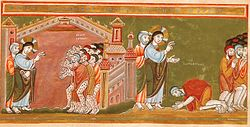
In the gospel lesson appointed for Thanksgiving (Luke 17:11-19) Jesus cures ten lepers of a pretty icky disease that’s made other folks want to keep their distance from them. Nine run to show themselves to the priests to be re-admitted to society, but one, a Samaritan, returns to offer his humble, heart-breaking gratitude to the one who restored him to health. All ten lepers were cured (temporarily at least. The condition of being human is ultimately incurable), but only the Samaritan was healed—made whole—because there can be no joy without gratitude.

Jesus tells the Samaritan, “Your faith has made you well.” That’s what it’s about, isn’t it? Faith and gratitude. They go together. If you lack faith, find your gratitude and your faith will be restored. If you lack gratitude, lean on your faith and the goodness of God will drop back into your heart.

I am always grateful that you chose to read my blog each week. May you have a blessed and meaningful Day of Thanksgiving.


[i] Orman, Suze The 9 Steps to Financial Freedom (Crown Publishers, 2006)

[ii] John 11:41a

Tuesday, November 14, 2023

Investment is Risky (Reflections on Pentecost 25, Year A 2023)

"Parable of the Talents" A. Mironov 2013

‘Well done, good and trustworthy slave!’ (Matthew 25:20)

Back in my misbegotten Hollywood days I worked for a time for a Wall Street investors relations firm. The LA office hired a bunch of us unemployed actors because we did most of our business over the telephone and they liked that we had nice speaking voices and could sound professional. I didn’t know much about the stock market when I started to work there, but I learned one important lesson about the securities business—it’s not at all secure. In fact, I left that office thinking most folks would have better luck taking their money to Las Vegas than investing it in the market. I like the disclaimer one brokerage firm tags their TV spots with: “Investments in securities involves the risk of loss.”

Yup. You can make a fortune trading stock, but you can also lose your butt. An investment in the gospel is also a risky proposition.

The gospel appointed in the Revised Common Lectionary for Pentecost 25, Year A (Matthew 25:14-30) tells the tale of a rich guy who has made some pretty shady deals himself and expects his employees to make him even richer than he already is. This boss is ready to pass out promotions and bonuses to the workers who show him they know how to turn a profit. He doesn’t appear to be the nicest guy to work for, nor the most honest, but he seems to have a keen idea about the abilities of his workforce, and he doesn’t trust his guys with more capital than he thinks they can handle.

(Fun fact: A “talent” was worth about 6,000 denarii—roughly equivalent to 6,000 times the average daily pay for a laborer. Multiply minimum wage by an eight-hour day times 6,000 and you’re talking a lot of cash. I think Jesus is telling us these guys were entrusted—as we are—with something pretty darn valuable.)

We don’t want to get too hung up on the profit and loss thing in this story. Some nitwit TV preacher might tell you Jesus wants you to live boldly and think positively so you can become filthy stinking rich just like the nitwit TV preacher. This is not the point. There are plenty of wealthy people in the world who are really rotten human beings, right? It’s best we look at this passage in light of the community for whom Matthew wrote it.

Matthew composed his gospel a good four decades after the time of Jesus. His folks were hoping the Lord was planning a return engagement during their lifetime, but, like the master in the parable, Jesus seemed to be taking his good, sweet time about coming back. This was a problem because confessing faith in Jesus was risky. Both the Jewish community and the Roman authorities were looking at Christians with a stink eye. It wasn’t all that safe to be a Christian, so some folks got scared and bailed on the faith.

I think Jesus’ point in this story—and Matthew’s point to his community—is, however long it may take, some day the boss will be back. He’s going to call you into his office and ask what you’ve done with the treasure he’s entrusted to you.

In the Greek, the boss calls the slave who buried his cash in the ground[i] “okneros.” This word could mean either lazy or timid. Both interpretations could apply. Unlike that First Century community, we probably won’t be jailed, exiled, or executed for being Christian, but our work for the Boss still carries risks. If we do the work of forgiveness, we risk being played for suckers. If we do the work of generosity, we risk our own resources. If we do the work of cheerful volunteers for causes we believe in, we risk being disappointed, being taken for granted, or being taken advantage of. If we do the work of charity, we risk becoming enablers. If we do the work of exhortation and witness, we risk alienating the ones we care about.

Investing in Christ involves risk. And there’s no guarantee that you’ll make a fortune doing it. You will, however, enter into the joy of your master. So keep doing it.

Thanks for investing these few minutes in my blog. It is a joy knowing you did!


[i] Burying your treasure in the ground wasn’t uncommon back in the day. This was the First Century’s version of the safety deposit box.

Tuesday, November 7, 2023

Get Some Oil for Your Lamp (Reflections on Pentecost 24, Year A 2023)


“Keep awake therefore, for you know neither the day nor the hour.” (Matthew 25:13)

Billy was an idiot. I’m sorry he died the way he did, but the young man went asking for trouble and had no difficulty finding it. I’ll spare you the details of how he came to die from a gunshot wound and just say that his young life was taken too soon. I was asked to do his funeral—what is it now?—some twenty years ago..? But of the hundreds of memorials I’ve done in twenty-five years as pastor in Northeast Philadelphia, his was one which I always remember. It wasn’t just the fact that his death was a homicide. What sticks in my mind is the reaction his posse of young mourners had to his killing.

You might think these kids would be grief-stricken, and you’d be right. They were. But they also appeared to be zombies, their faces frozen in masks of uncomprehending shock as if it had never occurred to them that a contemporary of theirs could die. With no faith tradition on which to rely, they had no clue as to how to frame their grief.

I thought about Billy and his bewildered friends when reading the gospel appointed for Pentecost 24, Year A in the Revised Common Lectionary (Matthew 25:1-13). As a pastor called upon to lead so many memorial services and as a hospital chaplain I can testify to the glaring contrast I’ve witnessed between people equipped with faith and those who are not so equipped when their loved one dies. Our spiritual disciplines are like the extra flask of oil carried by the wise bridesmaids in the parable. Praise, prayer, fellowship, generosity, and constant learning and questioning and seeking and doing are our companions on the long wait that is our lifetime. These are the ways a Christian prepares for events over which we have no control and of which we know neither the day nor the hour.

I’m certain when Matthew wrote his gospel his audience was eagerly expecting the imminent return of Jesus. We think Matthew wrote some four decades after the time of Jesus, so we can well imagine his community was getting anxious about Christ’s return. Certainly some of the community had died while waiting. Jesus’ parable says the Bridegroom is delayed, but wise watchers don’t fall asleep or become complacent. Like Matthew’s community so long ago, we also know that our life is made up largely of waiting—we waited for the end of COVID, we’ll wait for the end of the Israel-Hamas war, we wait for our kids to get married, grandchildren to be born, our turn to retire and, sometimes if we live long enough, for the day when we are called home by our Lord. Our life is a constant state of longing for something or something else.

But we long with Christ, and our relationship with him needs to be active and growing.

The compilers of the Revised Common Lectionary yoked this parable with a passage in the book of the prophet Amos. Amos was a farmer from the southern nation of Judah who felt called by the Lord to go north of the border into Israel and cry out against the religious and political leaders’ hypocrisy and complacence. The prophet accuses the Israelites of smugly believing their proper sacrificial rites and holy day observances are all that is required of them. They view themselves as observant of God’s law even while letting the poor starve.

I wonder what Amos would be saying to us today if God brought him back to confront the American church. I like to imagine he’d rail against the Christian right for their obsession with pro-life causes and their intolerance of LGBTQ+ individuals while ignoring issues of injustice and poverty. Yet what would be the message to the ELCA? Possibly we’d be called out for the same things for which Amos derided the Israelites. Yes, we are conscientious about our sacraments. We have our children baptized, see that they make their First Holy Communion, and we encourage them to study their lessons for Confirmation. But there we stop. We neglect to teach them that they’ll need an ongoing relationship with Christ and the Church to see them through the long wait of their lives and to be the extra flask of oil they carry when their world gets shaken by events of which they know neither the day nor the hour.

There are three things which stand out for me in the lessons appointed for Pentecost 24. First, our faith is a life-long journey. Our need to pray, grow, and participate in the things of God never ends. We wait in uncertain times, and we don’t know what’s ahead, but we carry our faith in the goodness of the Lord.

Second, we are called to an active faith. A recent country music hit by the artist Cody Johnson is called “’Til You Can’t.[i]” The message of the song is a warning that we don’t have forever to do the things we need to do. The singer tells us to say our “Sorrys” and “I love yous” while there is still time. At some point the door will swing closed.

Thirdly, we may have only so much oil for our lamps. If the well-prepared bridesmaids split their supply with the foolish bridesmaids, there would be the chance that all ten lamps might go out before the Bridegroom arrived. We need to be intentional in our spiritual lives, and that may mean saying “no” at some point. We cannot give what we don’t have ourselves.

There’s a phrase I often share at funeral services, and, perhaps, I might’ve shared it with those stunned and confused young people at Billy’s funeral. Your spiritual life can never be about what happens to you because you have no control over that. It can only be about how you embrace it. Pray that you have enough oil in your lamp to last you through the night.

 God bless you, and thank you for checking in on me this week.


[i] If you’d like to hear “’Til You Can’t,” click the link here.